Low House Edge Hunts: Pinpointing Blackjack Variants That Tilt Odds Your Way
Written by Vera Frank · Apr 19, 2026

Low House Edge Hunts: Pinpointing Blackjack Variants That Tilt Odds Your Way
Understanding House Edge in Blackjack's World
Blackjack stands out in casinos because its house edge often dips below 1 percent under optimal conditions, and experts have long noted how rule variations shift those odds dramatically; data from the Nevada Gaming Control Board reveals that standard American blackjack carries a house edge around 0.5 percent when players follow basic strategy, but savvy hunters zero in on variants that shave it even thinner, sometimes to 0.15 percent or less.
What's interesting is how deck count, dealer rules, and payout structures dictate these edges; single-deck games, for instance, cut the house advantage because fewer cards mean fewer opportunities for the dealer to draw strong hands, while rules like dealer stands on soft 17 further tilt the math toward players. Researchers who've crunched the numbers point out that combining these elements creates a landscape where certain variants emerge as prime targets for those chasing minimal casino takes.
Single-Deck Blackjack: The Gold Standard for Low Edges
Single-deck blackjack tops lists for low house edges, clocking in at about 0.15 percent with player-friendly rules such as doubling after splits and late surrender; figures from industry analyses confirm this variant's appeal, especially since it mirrors the classic game but strips away multi-deck dilution. Players often find these tables in Nevada properties, where regulations mandate clear postings of rules, and those who've tracked sessions report consistent edges under basic strategy play.
But here's the thing: not all single-deck offerings qualify; casinos sometimes hike the edge to 0.4 percent by enforcing dealer hits on soft 17 or restricting doubles, so hunters must scan rule placards meticulously, verifying payouts like 3:2 for blackjack instead of the dreaded 6:5 that balloons edges to over 1.7 percent. One study highlighted how widespread 6:5 adoption erased player advantages almost overnight, turning promising games sour.
- Key rules for sub-0.2 percent edge: Dealer stands on soft 17, double after split allowed, no 6:5 payouts.
- Average sessions show players retaining 99.85 percent of wagers long-term.
- Availability spikes in physical casinos, though online mirrors emerge with certified RNGs.
Blackjack Switch and Its Clever Switcheroo
Blackjack Switch introduces a twist where players swap cards between two hands, pushing the house edge down to roughly 0.17 percent despite a 1:1 blackjack payout; this mechanic, popularized in the mid-2000s, compensates with liberal doubling and splitting rules, and data indicates skilled players exploit the switch to dodge dealer busts effectively. Observers note its rarity in some markets, but April 2026 updates from Ontario's gaming overseers signal expanded online availability, with platforms now featuring it under strict audits.
Takes one expert who dissected thousands of simulated hands: switches prove most potent against dealer 22 pushes, where all player 22s also push, creating even-money scenarios that blunt the house's bite. Yet casinos counter with no-hole-card rules post-bust, nudging edges up slightly; those hunting these tables prioritize venues listing full rule sets upfront, avoiding hidden gotchas.
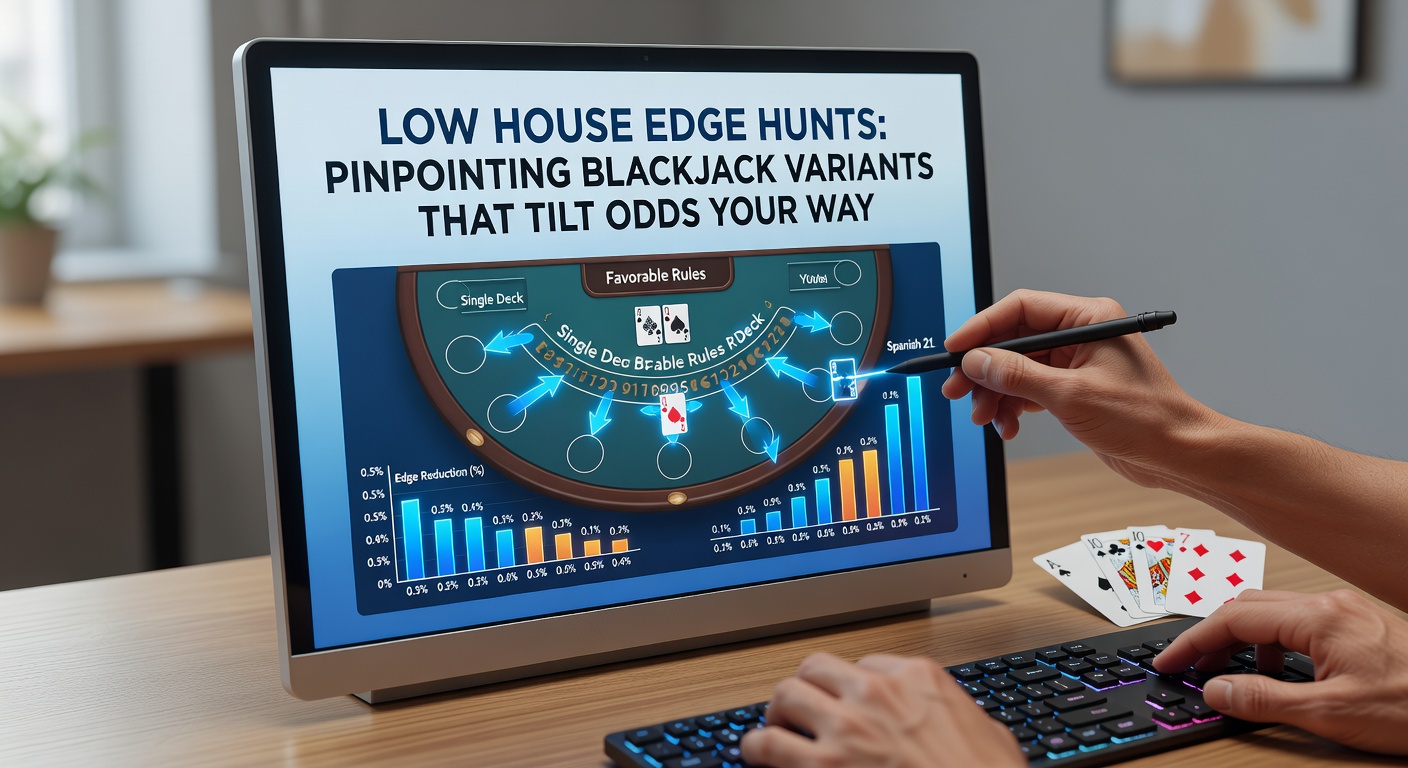
Spanish 21: Bonus-Packed with a Subtle Edge
Spanish 21 strips decks of 10s yet offsets this with player bonuses on suited blackjacks, late surrender, and redoubling, landing house edges around 0.4 percent or lower; research from Australian gambling studies, like those compiled by the Queensland Government Office of Liquor and Gaming Regulation, underscores how these extras—such as 2:1 payouts for 21s versus dealer ace—keep it competitive. Players who've mastered the adjusted basic strategy often discover retention rates rivaling single-deck play.
Now, variations abound: match play bonuses or envy payouts add volatility but don't spike the core edge, and it's noteworthy that European adaptations tweak it further for local tastes; in April 2026, EU platforms rolled out certified versions amid regulatory pushes for transparency, making cross-border hunts easier than ever. The reality is, this variant shines for bonus chasers, with data showing average edges dipping below 0.3 percent in optimal setups.
- Bonus triggers: Player 21 anytime (6:5), suited 7-7-7 (progressive).
- Edge factors: No 10s balanced by 50 percent more doubles.
- Pro tip from simulations: Surrender aggressively against dealer aces.
And while purists balk at missing 10s, stats reveal Spanish 21's volatility favors bold bankrolls, turning sessions into potential edge reversals.
Double Exposure and Pontoon: Underdog Contenders
Double Exposure flips the script by revealing both dealer cards, yet house edges hover at 0.69 percent with tweaks like blackjack ties and no resplits; experts who've modeled it extensively find player blackjacks beating dealer ones as the equalizer, especially in versions allowing dealer busts on 22. Turns out, this transparency empowers perfect strategy, squeezing edges tight in select online lobbies.
Pontoon, a British cousin, demands five-card tricks and offers 2:1 blackjacks, with house edges as low as 0.38 percent per computational runs; rules like compulsory doubles on 9-11 keep it brisk, and Canadian regulatory filings confirm its steady presence in licensed halls. Those studying transatlantic variants observe how Pontoon's banker's edge mirrors blackjack's math, just repackaged for faster play.
Here's where it gets interesting: hybrid online offerings in 2026 blend these, posting audited edges via third-party labs, so hunters cross-reference variant lists against payout certs before diving in.
Hunting Tips: Rules, Regs, and Real-World Checks
Spotting low-edge variants starts with rule decoding—fewer decks, stand-on-soft-17, 3:2 payouts scream opportunity—yet confirmation comes from session trackers and strategy charts tailored per game; people who've logged thousands of shoes swear by apps simulating exact rules, revealing true edges pre-wager. Casinos must display RTPs in regulated spots, per bodies like New Jersey's Division of Gaming Enforcement, streamlining the hunt.
So, online shifts in April 2026 matter: live-dealer streams now tag variants with live edge calcs, letting players filter for sub-0.5 percent tables amid rising competition. Observers point to industry reports showing 15 percent more low-edge games launched quarterly, driven by player demand and tech audits.
But the ball's in the players' court for bankroll sizing; data across variants shows variance spikes in single-deck, demanding deeper stacks, while Switch's swaps smooth short-term swings. It's not rocket science—pair hunts with strategy, and math tilts subtly playerward.
Conclusion: Navigating the Low-Edge Landscape
Low house edge blackjack variants like single-deck, Switch, and Spanish 21 persist as beacons for those dissecting casino math, with edges consistently under 0.5 percent fueling prolonged play; regulatory evolutions, from Nevada postings to Australian stats and Ontario expansions, ensure transparency grows, particularly as April 2026 brings more certified online options. Researchers emphasize that while no game erases the house take entirely, pinpointing these—via rules vigilance and strategy adherence—maximizes retention, turning hunts into calculated edges. Those who track them methodically uncover tables where the odds, though slim, align most favorably, keeping blackjack's allure alive across formats.