Examining RNG Seed Cycling Patterns and Their Effects on Symbol Alignment Probabilities in Cross-Jurisdictional Mobile Slot Networks
Written by Noah Butler · Jul 21, 2026

Examining RNG Seed Cycling Patterns and Their Effects on Symbol Alignment Probabilities in Cross-Jurisdictional Mobile Slot Networks
Data from mobile gambling platforms indicates that random number generator seeds serve as the foundational input for determining symbol positions on virtual reels, and operators cycle these seeds at fixed intervals to maintain sequence unpredictability. In July 2026 several cross-border networks adjusted their cycling protocols in response to updated technical standards issued by regulators in multiple regions, which altered how frequently new seeds replace previous ones during active sessions.
Mechanics of Seed Generation and Cycling
Researchers have documented that mobile slot applications typically initialize RNG seeds through a combination of hardware entropy sources and time-based values, after which the system advances the seed through a deterministic algorithm until a replacement occurs. Cycling frequency varies by jurisdiction because licensing authorities set minimum requirements for sequence length before reseeding must take place, and these rules directly shape the statistical distribution of symbol alignments that players encounter. When a seed remains active across thousands of spins, the resulting number stream follows a predictable mathematical progression even though individual outcomes still appear random to observers.
Jurisdictional Variations in Cycling Requirements
Regulatory frameworks in North America and Europe impose different constraints on seed management. The Nevada Gaming Control Board requires documented reseeding intervals for all certified mobile games, whereas the Alcohol and Gaming Commission of Ontario focuses on audit trails that track seed transitions in real time. These differences create distinct probability landscapes when the same game title operates across state and provincial lines, because longer seed cycles can produce measurable clustering in symbol distributions while shorter cycles reset the sequence more often.
Symbol Alignment Probabilities Under Different Cycling Regimes
Statistical models developed by testing laboratories demonstrate that seed cycling intervals influence the frequency of specific reel combinations. Longer cycles allow the pseudorandom sequence to traverse deeper into its period, which can increase the occurrence of near-miss patterns or stacked symbols depending on how the reel strips were weighted during certification. When operators shorten the cycling window, the sequence restarts before those deeper patterns fully emerge, resulting in a flatter distribution of alignment events across sessions.
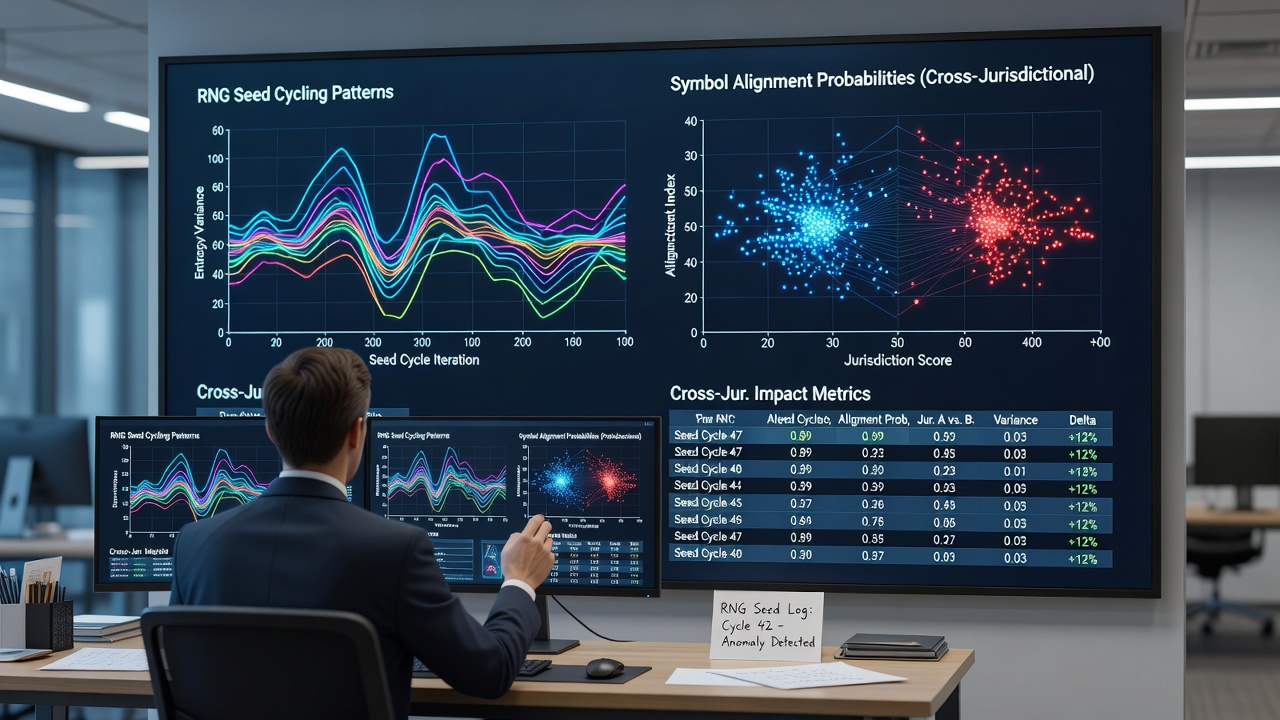
Studies conducted by independent verification firms show that cross-jurisdictional networks must reconcile these varying cycle lengths through game versioning, so a single title may employ one cycling schedule in one market and a different schedule in another. Players who access the same game on devices registered in separate jurisdictions therefore experience measurable differences in the rate at which particular symbol alignments appear, even though each version maintains its certified return-to-player percentage.
Network-Level Implementation Across Borders
Platform operators that serve multiple regions maintain separate RNG instances or partitioned seed pools to comply with local rules while sharing core game logic. This architecture requires careful synchronization because a seed transition triggered by one jurisdiction's rules can affect session continuity for users connected through the shared backend. Data logs examined by compliance auditors reveal that such transitions occasionally produce brief periods of altered symbol weighting until the new seed stabilizes, although the overall mathematical fairness remains intact.
Monitoring and Compliance Mechanisms
Regulators require continuous logging of seed values and transition timestamps so that any deviation from approved cycling patterns can be identified during routine inspections. In July 2026 several networks introduced enhanced monitoring dashboards that flag when a mobile title approaches the maximum permitted sequence length in any given jurisdiction, allowing operators to initiate reseeding before regulatory thresholds are crossed. These systems rely on timestamp correlation across servers located in different time zones, which adds complexity but ensures consistent enforcement.
Implications for Cross-Border Player Sessions
Users who switch between mobile applications licensed in different markets encounter RNG environments governed by distinct cycling parameters. Because symbol alignment probabilities derive directly from the active seed and its position within the cycle, session outcomes can diverge even when the underlying reel configuration stays identical. Industry reports compiled by multi-jurisdictional operators confirm that these divergences remain within the variance ranges established during game certification, yet they produce observable differences in short-term hit frequency and bonus trigger rates.
Testing protocols now include simulated cross-border play scenarios in which the same device account accesses versions of a title subject to different cycling rules, allowing laboratories to quantify the resulting shifts in alignment statistics before deployment.
Conclusion
Seed cycling patterns constitute a core technical control that shapes symbol alignment behavior in mobile slot networks operating across multiple regulatory environments. Variations in required cycling intervals produce distinct probability distributions that operators must manage through versioning and monitoring systems. As of July 2026, updated compliance frameworks continue to refine how these patterns are tracked and audited, ensuring that mathematical fairness persists regardless of the jurisdiction in which a session originates.