Charting the evolution of age-verification protocols in cross-border live dealer platforms and their effects on account verification timelines
Written by Nils Sullivan · Jul 26, 2026
Charting the evolution of age-verification protocols in cross-border live dealer platforms and their effects on account verification timelines
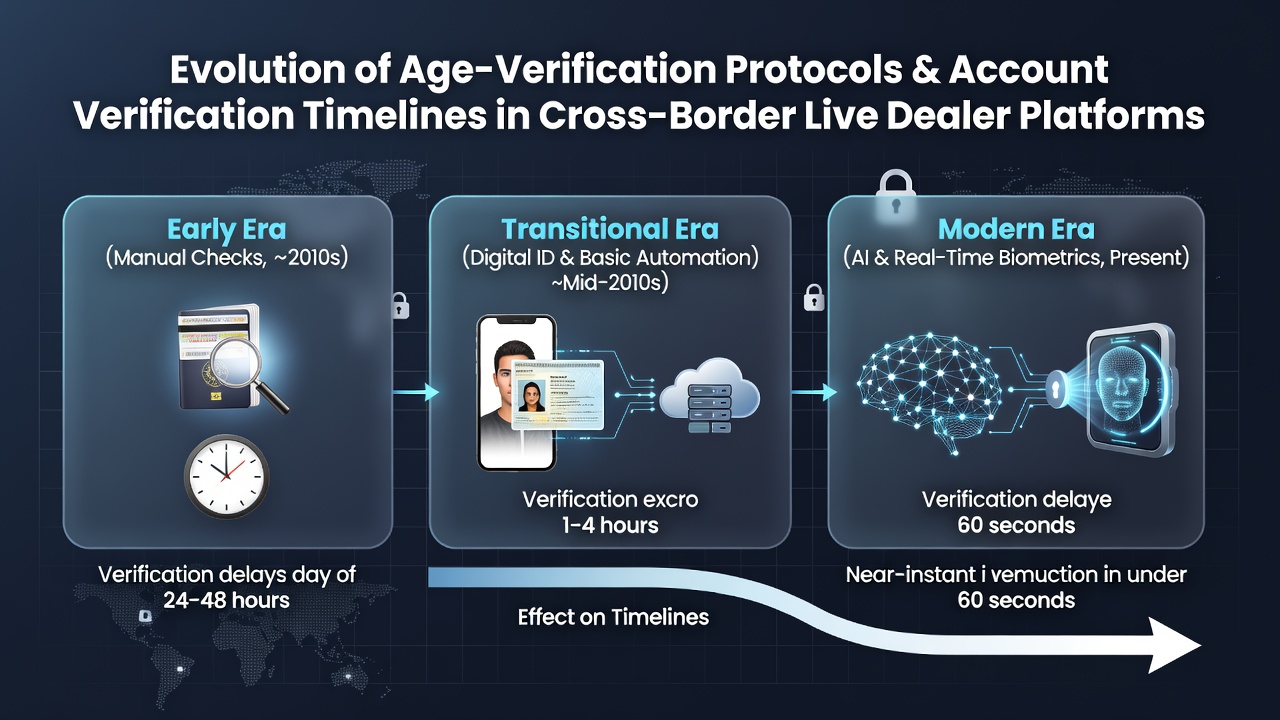
Age-verification protocols in cross-border live dealer platforms began with basic document uploads and manual checks in the early 2000s, then shifted toward automated systems that integrate government databases and biometric tools as regulatory demands grew across multiple jurisdictions. These changes altered account verification timelines by compressing initial review periods in some regions while extending them in others due to layered compliance requirements. Data from industry reports shows that early platforms often completed checks within 24 hours, whereas current cross-border operations frequently span three to seven days when platforms must reconcile differing national standards.
Initial Development of Verification Methods
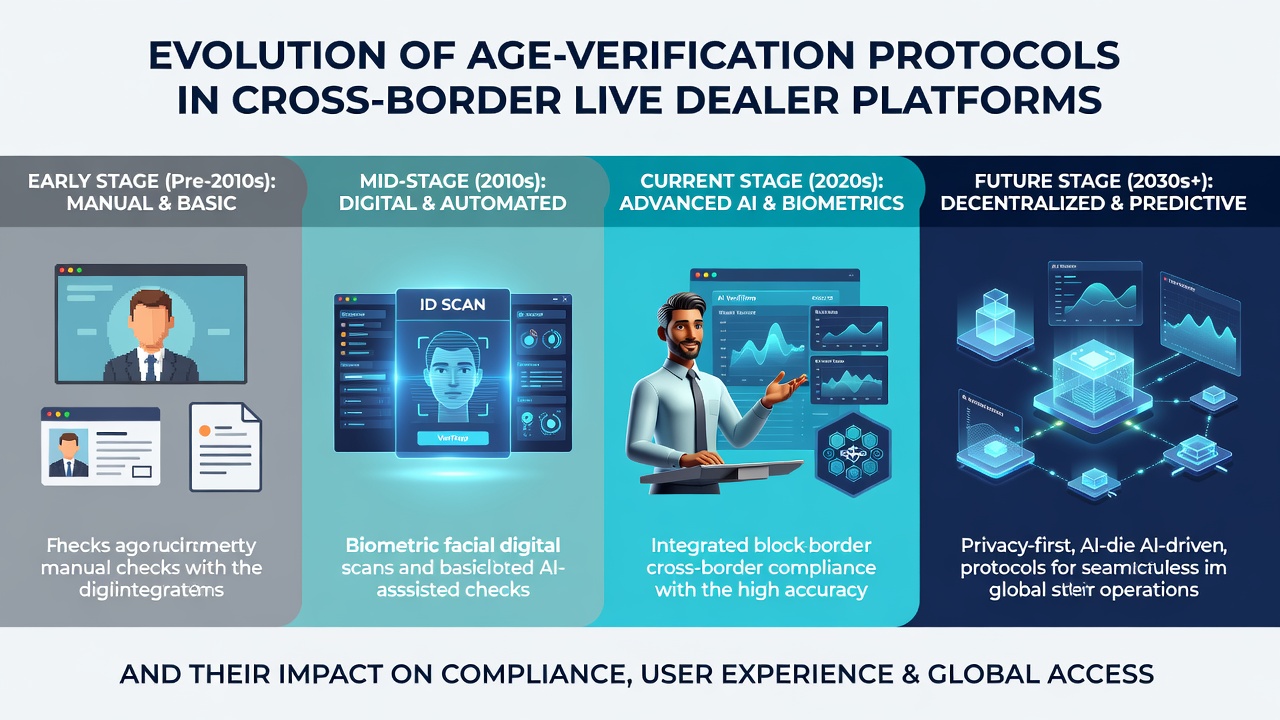
Live dealer platforms first relied on scanned identification documents combined with simple database queries against public records, and this approach worked for operators serving limited markets but created delays when users crossed borders. Researchers at academic institutions documented how these manual processes required human reviewers to match names, dates of birth, and addresses against varying international formats, which added hours or days to timelines depending on the volume of submissions. By the mid-2010s, many platforms introduced third-party verification services that pulled data from credit bureaus and electoral rolls, yet cross-border cases still demanded extra steps to confirm residency and age under each target country's rules.
Integration of Advanced Technologies
Biometric authentication and artificial intelligence tools entered the picture around 2018, allowing platforms to scan facial features or fingerprints against government-issued IDs in real time. This development shortened verification for users within single jurisdictions, while cross-border live dealer sessions encountered new hurdles because data-sharing agreements between countries remained incomplete. Observers note that platforms serving European and Asian markets simultaneously had to maintain separate compliance pipelines, which sometimes doubled the time required for full account activation. Studies from research organizations indicate that AI-driven systems reduced false positives by up to 40 percent in domestic settings, yet the same tools required additional human oversight when passport data from one nation conflicted with residency proofs from another.
Cross-Border Regulatory Pressures
Operators managing live dealer tables across multiple countries face overlapping rules that dictate how quickly accounts can move from registration to active play. In July 2026, several platforms reported adjustments to their protocols following updates in regional digital identity frameworks, and these shifts extended average verification windows by one to two business days for users in overlapping regulatory zones. Platforms must now reconcile requirements from bodies such as the Canada Revenue Agency alongside those from Australian state regulators, creating sequential rather than parallel review stages. Data compiled by gaming associations reveals that operators without unified systems experienced the longest delays, with some accounts remaining in pending status for over ten days during peak periods.
Measured Effects on Account Timelines
Verification timelines directly influence when players gain access to live dealer tables, and platforms that adopted unified digital identity wallets cut average processing from five days down to 48 hours in compatible markets. Those serving broader international audiences continue to report longer windows because each additional jurisdiction introduces fresh document validation layers. Industry figures reveal that biometric cross-checks with national databases now handle the majority of cases within 12 hours when data agreements exist, whereas manual escalation for mismatched records still pushes timelines beyond a week. One study of platform operations found that 65 percent of cross-border accounts cleared within three days after 2024 updates, compared with only 35 percent under earlier protocols.
Case Examples from Platform Operations
Operators running live dealer roulette and blackjack across continents provide concrete illustrations of these timeline shifts. A platform connecting users from North America and Europe implemented a staged verification model that first confirms age through biometric match then routes the account for secondary residency checks, and this sequence added consistent two-day intervals to the process. Another operator serving markets in Asia and South America streamlined timelines by adopting portable digital credentials recognized in both regions, reducing pending periods from an average of six days to under 72 hours. Figures from trade group analyses show these adaptations improved player retention metrics because accounts reached playable status faster once initial hurdles cleared.
Current Landscape in Mid-2026
By July 2026, many live dealer platforms incorporated real-time database queries with emerging digital ID systems, yet cross-border verification still requires coordination between at least two regulatory frameworks in most cases. Platforms report that accounts involving three or more jurisdictions encounter the steepest timeline increases, often stretching beyond standard domestic processing windows. Research indicates continued investment in interoperable verification tools aims to compress these periods, although full standardization across borders remains incomplete. Those tracking the sector observe that operators balancing speed with compliance continue to refine their pipelines in response to each new regulatory update.
Conclusion
The evolution of age-verification protocols in cross-border live dealer platforms has produced measurable changes in account verification timelines, moving from manual document reviews to layered biometric and database systems. These developments have compressed timelines in aligned markets while extending them where regulatory overlap requires sequential checks. Data from multiple sources shows ongoing refinements through 2026 as platforms integrate new digital identity tools to manage the balance between compliance and user access.