Biometric Verification Layers Integrate with Security Protocols Across Cross-Border Betting Networks
Written by Nils Sullivan · Jul 31, 2026
Biometric Verification Layers Integrate with Security Protocols Across Cross-Border Betting Networks
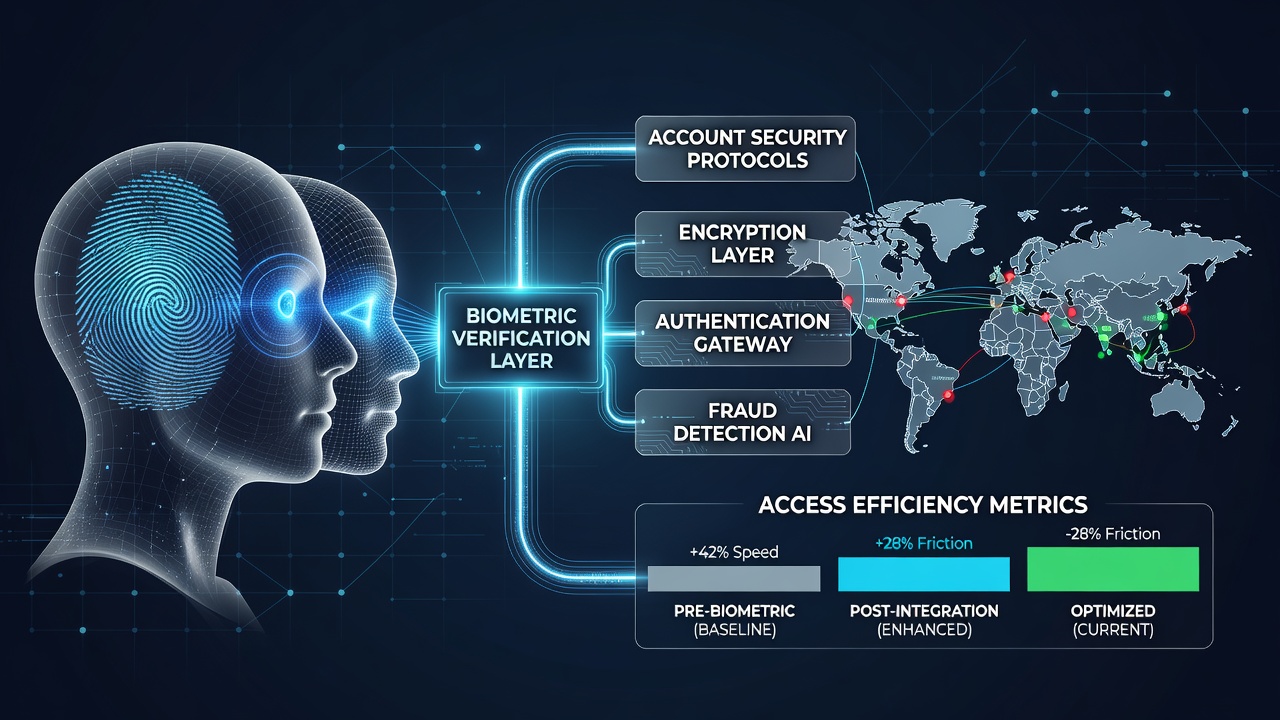
Biometric verification layers now connect directly with account security protocols in cross-border betting networks, and operators track how these connections influence access efficiency metrics throughout 2026. Systems combine fingerprint, facial recognition, and voice patterns with existing password and token frameworks, while platforms process verification requests across jurisdictions such as the United States, European Union member states, and parts of Asia.
Core Integration Mechanisms
Account security protocols receive biometric data through encrypted channels that match templates stored on secure servers, and this process reduces reliance on manual document uploads during login or withdrawal steps. Researchers at academic institutions have documented how these layers sit alongside multi-factor authentication routines, whereas operators in multiple regions report that biometric checks activate only when transaction volumes or location signals exceed predefined thresholds. Data from regulatory filings shows that such selective activation maintains compliance with local rules while preserving session continuity for verified users.
Cross-Border Network Challenges
Cross-border betting networks face differing data protection requirements, and biometric integration must accommodate variations between frameworks such as those enforced by the Nevada Gaming Control Board and the Malta Gaming Authority. Platforms route verification requests through centralized hubs that apply jurisdiction-specific rules before granting access, yet latency measurements indicate that these routing steps add measurable time to the overall authentication sequence. Operators address this by deploying edge servers that pre-process biometric samples and forward only essential metadata, which shortens the interval between initial login attempt and account access confirmation.

Access Efficiency Metrics and Measurement
Access efficiency metrics include average time to first bet after login, successful verification rate per session, and repeat authentication failures across different device types. Studies conducted by industry research groups reveal that networks incorporating biometric layers record lower failure rates compared with password-only systems, while figures from operational dashboards demonstrate that average session initiation times decrease when biometric templates remain cached within the same regulatory zone. Those metrics also capture regional differences, since users crossing from one licensing area to another encounter additional protocol checks that extend processing windows by several seconds on average.
Protocol Synchronization and Data Handling
Security protocols synchronize biometric outputs with risk-scoring engines that evaluate transaction history and device fingerprints, and this synchronization allows networks to adjust verification intensity in real time. Reports from the Nevada Gaming Control Board outline how such engines flag anomalies without interrupting service for the majority of users, whereas technical documentation from the Malta Gaming Authority describes audit trails that record every biometric match attempt alongside traditional security events. Observers note that these combined logs support both regulatory oversight adn internal optimization of efficiency metrics.
Operational Examples from Mid-2026
In July 2026, several major networks expanded biometric coverage to include voice recognition for high-value transfers, and preliminary performance data indicates that voice samples integrate smoothly with existing facial and fingerprint checks. Efficiency metrics collected during this rollout show reduced support ticket volume related to forgotten credentials, while cross-border users experience fewer repeated verifications when they remain within pre-approved geographic corridors. Technical teams continue to refine template storage methods to comply with emerging data residency rules without lengthening authentication sequences.
Conclusion
Biometric verification layers now form an established component of account security protocols in cross-border betting networks, and ongoing measurements of access efficiency metrics guide further refinements. Regulatory bodies across multiple regions continue to monitor these integrations, while operators adjust routing and caching strategies to balance compliance requirements with user access speed. The resulting systems reflect coordinated efforts among technology providers, licensing authorities, and network operators to maintain secure yet responsive betting environments.